Theme and guiding question
Each session opens on a central theme and an open-ended question that invites students to think critically and bring their own perspective.
Valuing Our Identity, Community, and Education
A 12-session curriculum that helps young people name what they know, listen to each other, and say it out loud.
What It Is
VOICE is a youth engagement framework and 12-session curriculum. It helps students reflect on who they are, recognize the strengths they already carry, understand the communities that shaped them, and build the confidence to share their stories, questions and ideas.
Plenty of young people hold insight, creativity, cultural knowledge and leadership potential that a traditional classroom never gets around to measuring. VOICE starts from the belief that those strengths matter. It helps youth name what they know, listen to others, ask harder questions, and consider how their experience shapes the way they move through school and life.
It is built for classrooms, advisory periods, after-school programs, mentorship programs and community learning spaces. It is locally grounded by design: Lompoc sources, places, stories and issues run through the sessions, so broad themes land somewhere students actually recognize.
The Framework
A session may open on identity and lead into community. A conversation about local history can open space for belonging, voice and purpose.
Building trust and peer connection, so the group is a space where their stories and perspectives matter.
Examining who they are, what shaped them, and the strengths they bring from family, culture and neighborhood.
Connecting to the local history, culture, institutions and stories of the places they call home.
Practicing reflection, storytelling, self-advocacy and the confidence to express themselves.
Connecting what they learn about themselves and their community to their goals and their contribution.
How A Session Runs
Facilitators follow the purpose of each session while making their own calls on pacing, depth and which local material fits.
Each session opens on a central theme and an open-ended question that invites students to think critically and bring their own perspective.
A local source, story, place or issue gives students a concrete way in and ties the question to real places and experiences.
Discussion, personal reflection, community mapping, storytelling, role-play, music, art or creative response, pitched so everyone can take part.
Journaling, drawing, poetry, collage, mapping or storytelling. The form shifts with the session and the group.
Each session feeds the culminating project, helping students notice the questions and stories that matter to them.
The Curriculum
| No. | Session | Guiding question |
|---|---|---|
| 1 | Program welcome and cohort identity | What kind of space do we want to build together? |
| 2 | Identity and personal assets | Who am I? What strengths, interests and experiences shape me? |
| 3 | Community assets and barriers | What strengths and barriers do we see in our community, and what would we change? |
| 4 | Lompoc then and now | How have Lompoc and our school changed over time? |
| 5 | Lompoc's cultural history, part one | Who has shaped Lompoc, and what can their experiences teach us? |
| 6 | Lompoc's cultural history, part two | How have culture, migration and struggle shaped life in Lompoc? |
| 7 | Student voice and local decision making | How can students use their voice to shape the school and community? |
| 8 | Punitive versus opportunity | How can different responses change what happens next? |
| 9 | Social movements and local struggle | How have people used their voices to resist and create change? |
| 10 | Music and meaning | How can music express identity, struggle, resistance and hope? |
| 11 | Art, struggle and community | How can art tell stories and become a form of expression or resistance? |
| 12 | Learning from and with the community | What can we share, celebrate and learn from one another? |
The Culminating Project
It grows out of the questions and stories students surface along the way. The facilitator guides the process without deciding it. The format matters less than the ownership.
What Changes
Measured with a pre- and post-program assessment, alongside youth reflections, facilitator observations and partner feedback. Success is judged against the whole set of outcomes rather than any single number, and what the assessments show feeds back into the next cycle.
Get Involved
Whether you are a student who wants in, an educator who wants to run the curriculum with a cohort, or someone who wants to help facilitate, leave your email and the team will follow up.
Word when the next cohort is forming, and how to take part. Unsubscribe in a click.
Locally Rooted
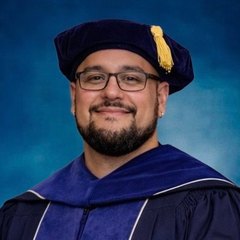
Developer of the VOICE Initiative
A proud Lompoc High School graduate and first-generation college student, Victor DeAlba's experiences growing up on the Central Coast shaped his commitment to education and community. Supported by his family and community, he began his higher education journey at Allan Hancock College, earning an associate degree in Sociology before transferring to UCLA. He later earned his Ph.D. in Educational Leadership from The Pennsylvania State University.
VOICE reflects his own path, his research, and his work with young people. The framework draws on his dissertation research into student belonging and transformative educational spaces, alongside scholarship from Yosso, Valenzuela, Freire, hooks, Ladson-Billings, Rios, Cook-Sather and others on cultural wealth, student voice and youth-adult partnership.
VOICE was developed through Central Coast Knowledge Institute, an independent research, education consulting and community engagement organization based in Lompoc. The Lompoc VOICE Initiative is implemented as a program of the Gamma Scholar Foundation.
Also On The Central Coast
Companion program
The umbrella program: educational opportunities, mentorship and community engagement for high school and college students across the Central Coast. VOICE is one of its two initiatives.
Support It
The Gamma Scholar Foundation brings people and resources together to advance education, cultivate leadership, and strengthen the communities we serve. Our commitment is simple: turn shared knowledge and resources into meaningful action.
Tax deductible, and it funds facilitation, materials and the culminating project for a group of Lompoc youth.